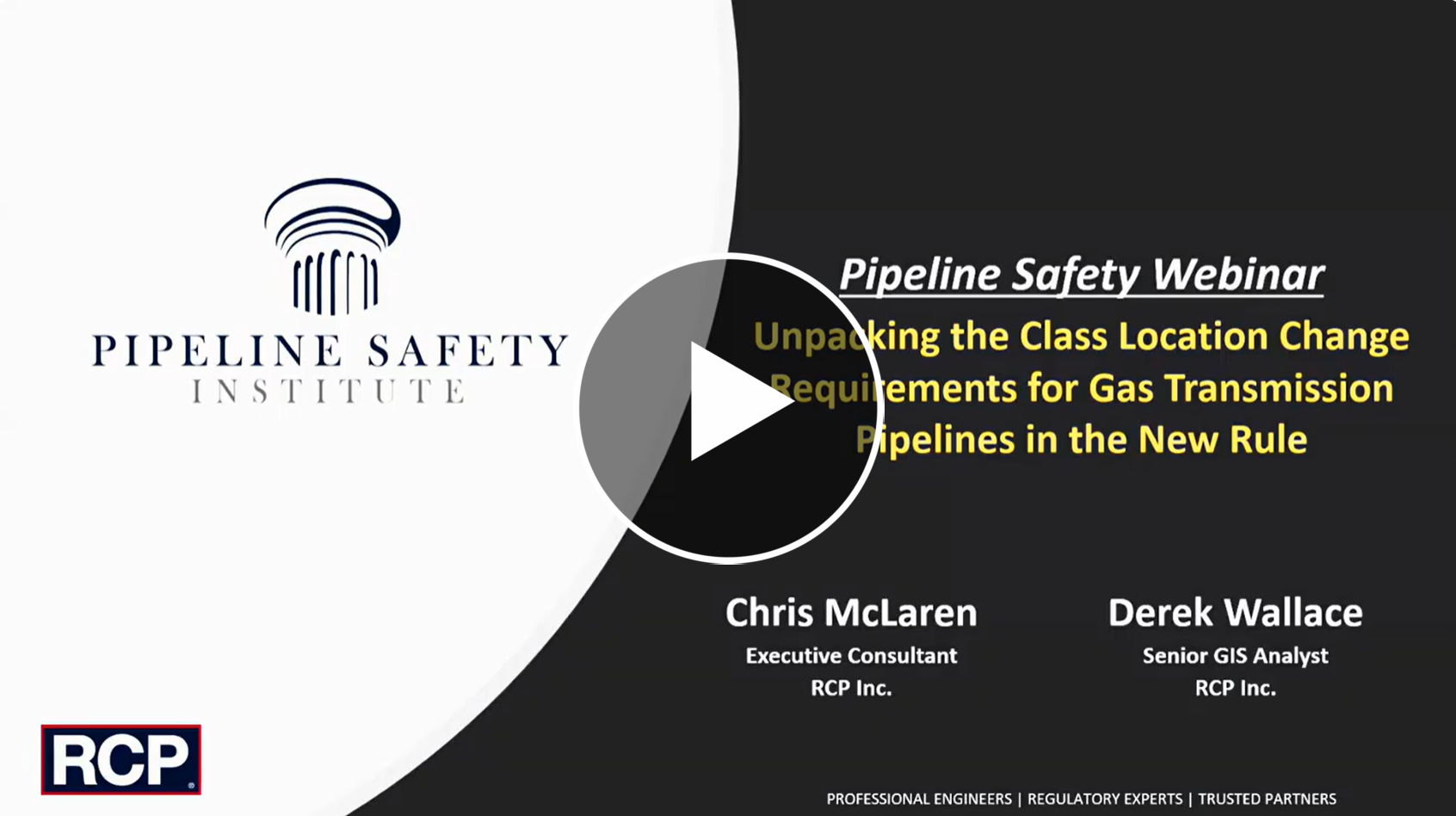
The Gas Pipeline Advisory Committee (GPAC) met June 25 – 26 to discuss the third part of the proposed gas mega-rule, Safety of Gas Gathering Pipelines. The GPAC voted on various proposals made by PHMSA in response to comments submitted to the docket for the original NPRM Safety of Gas Transmission and Gathering Pipelines. These included modifications to reporting, definitions, requirements for newly regulated gas gathering lines, and which gas gathering lines would fall within the scope of the rulemaking. A few GPAC votes of interest:
- Withdraw the proposed changes to the definition of Gas
Gathering from this rulemaking, thus continuing to incorporate API RP 80
for definitions of gas gathering lines, gas treatment, gas processing and
onshore gas production operations. PHMSA indicated it will monitor
the outcome of the API working group’s effort to revise API RP 80 and
develop API RP 1182 and may change the definition of gas gathering lines,
if needed, in future rulemaking.
- Extend the deadline for determining applicability of
the new rule to 2 years from the effective date. Extend the deadline for
compliance with new requirements to 3 years from the effective date.
Extend the deadline for compliance when a previously unregulated gas
gathering pipeline becomes regulated to 2 years.
- Create a minimum set of requirements for all gas
gathering lines 8-inches and larger nominal outside diameter (ex. damage
prevention, line markers, public awareness, emergency plans, leakage
surveys and repairs, and design, construction, inspection and testing of
new lines). PHMSA will consider additional requirements for gas
gathering lines greater than 12-inch nominal outside diameter that have a building
intended for human occupancy located within the pipeline’s Potential
Impact Radius.
To view the recorded webinar or download the presentations, click here.
Bonus: Alan Mayberry, PHMSA Associate Administrator for Pipeline Safety, announced that the draft NPRM for Valves and Rupture Detection has been submitted to OMB for their review, so keep an eye on the Federal Register and this newsletter over the next few months to see what is contained in this proposed rule.
Gas Mega-Rule Support
Are you ready for the three pending gas transmission and gathering regulations? RCP has been heavily involved throughout this rulemaking process and is ready to assist operators as they get prepared. Whether it’s a deep dive into MAOP records reconfirmation, assessing where your Moderate Consequence Areas exist, reviewing existing pipeline integrity programs, developing action plans to get into compliance, or simply providing training to your team on what’s coming, RCP can help. Visit www.rcp.com or contact Jessica Foley for more information.
Many oil and natural gas
companies, pipeline operators, fuel distribution and delivery firms, and other
owners and operators of oil and natural gas infrastructure, as well as the
government agencies that regulate them in some respect, are seeking cost-effective
ways to make these infrastructure systems more resilient against cyber and
physical threats as well as severe weather events. The U.S. Department of
Energy (DOE) issued a Request for Information (RFI) to gather “relevant
consensus-based codes, specifications, and standards” and other pertinent
materials to provide guidance for enhancing the physical and operational
resilience of these systems and their components against such events.
Gathering this information will
enable existing expert knowledge on this subject to be synthesized and made
broadly available to interested policy officials and other decision-makers.
Organizing existing knowledge in this way will also help identify important
information gaps that can then be addressed through targeted research and
development activities and through emergency preparedness actions by government
agencies and the private sector.
Comments in response to this RFI are due on or before August 23, 2019, and can be emailed to oilandgas.resilience@hq.doe.gov with ‘‘Guidance for Enhancing Oil and Natural Gas Resilience’’ in the subject line. Comments, data, and other information submitted to DOE electronically should be provided in PDF, Microsoft Word, Microsoft Excel, WordPerfect, or text (ASCII) file format.
For further information, contact: David Meyer, U.S. Department of Energy, Office of Electricity, at (202) 586-3876 or by email.
For a copy of this RFI from the Federal Register, contact Jessica Foley.
[House Bill 866]
The State of Texas, House Bill 866, was signed by Gov. Greg Abbott and will take effect immediately. HB866 requires natural gas pipeline operators to remove all cast-iron pipes from their systems by December 31, 2021, and prohibits the future use of cast iron, wrought iron or bare steel pipeline in the State of Texas. HB866 also requires operators of distribution gas pipeline systems to:
- Develop and implement a risk-based program for
the removal or replacement of underground distribution gas pipeline facilities;
and,
- Annually remove or replace at least 8% (an
increase from 5%) of underground distribution gas pipelines posing the greatest
risk in the system and identified for replacement under the program.
For a copy of House Bill 866, contact Jessica Foley.
[LA Senate Bill No. 82]
Louisiana has passed Senate Bill No. 82, which affects the Louisiana
811 Dig Law. These updates become effective August 1, 2019.
This Bill updates Louisiana Statute 40:1749.13(B)(5),
1749.14(C)(1)(b)(iii) and (3) to allow Operators and Excavators to mutually
agree on an extended time to mark pipelines located on or in water. This
agreement must be documented. In absence of an agreement, the Commissioner of
Natural Resources may delay the mark-by time of these pipelines. The current
required wait time to begin excavation is two full business days from placing
the one call notification. The updated
regulation also allows an Excavator additional time to renew the one call
notification past the current 20 day requirement if the pipeline is on or in
water and the work has not been completed.
For a copy of the updated statues, contact Jessica Foley.
[Docket No. RMU-2016-0004]
The Iowa Utilities Board issued a Notice of Proposed
Rulemaking (NPR) to amend Chapter 10, “Intrastate Gas and Underground Gas
Storage.” As part of a comprehensive review of its rules, the Utilities
Board has reviewed its rules that establish filing requirements for companies
that propose to construct, operate, and maintain natural gas pipelines. This
proposed rulemaking updates the requirements for obtaining natural gas pipeline
permits and is based upon the Board’s experience in recent years in reviewing
petitions for permits. Stakeholder comments were sought during the Board’s
review and have been considered in the proposed amendments to the rules in
Chapter 10. In addition, the Board is updating the safety standards for natural
gas pipelines to make them consistent with federal and industry standards since
pipeline companies are required to comply with the most recent federal and
industry standards.
The Board issued an order commencing rulemaking on May 31, 2019. The order is available on the Board’s electronic filing system, under Docket No. RMU-2016-0004. For a copy of the proposed rulemaking, contact Jessica Foley.
Underground Gas Storage
RCP is the market leader for underground gas storage integrity and risk management. We have unmatched industry leaders, including Rick Gentges, Steve Nowaczewski, Terry Rittenhour, Phil Baker and more available to assess your program and provide practical feedback and recommendations for improving your gas storage integrity and risk programs. For more information about RCP’s underground gas storage integrity management and risk analysis services, visit our website or contact Jessica Foley.
Effective July 30, 2019, the state of Missouri has adopted the most recent edition of 49 CFR 193 concerning LNG facilities into its state regulations (4 CSR 240-40.033 Safety Standards–Liquefied Natural Gas Facilities). Part 193 was not previously regulated at the state level in Missouri.

 Heather Roark
 Jessica Foley